


England’s cattle and sheep populations fell again in the year to June 2026, according to Defra’s June livestock survey, deepening a long-run contraction that meat processors warn could raise reliance on imports.
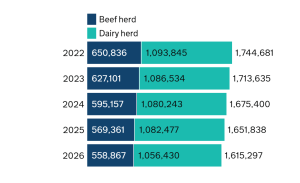
Cattle and calf numbers dropped 1.5% to 4.8mn, the lowest on record. The breeding herd fell 2.2% to 1.6mn, with the dairy herd down 2.4% at 1.1mn and the beef breeding herd down 1.8% at 559,000, a 14% fall since 2022. Sheep and lambs declined 2.0% to 13.0mn, while the female breeding flock dropped 3.7% to 6.2mn, from more than 7mn in 2022.
Figure 1 – Female cattle breeding herd in England at 1 June (Number of cattle)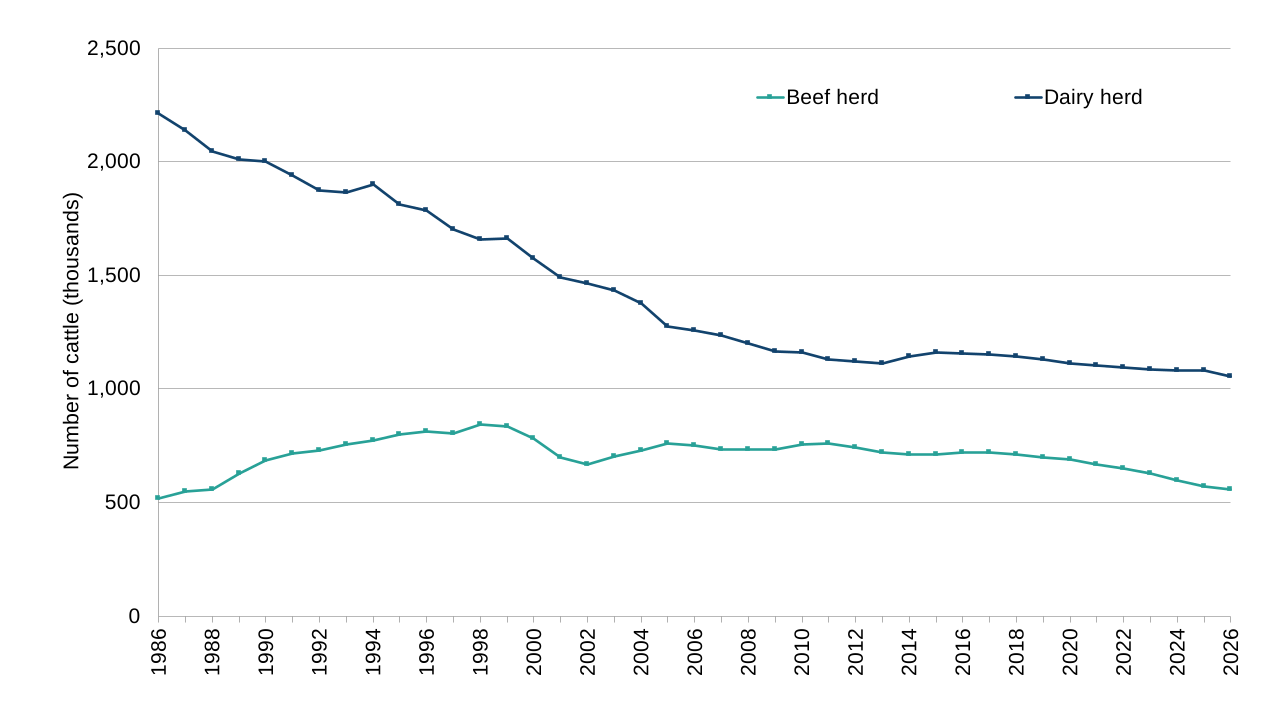
Figure 2 – Breakdown of the female cattle breeding herd in England at 1 June (Number of cattle)
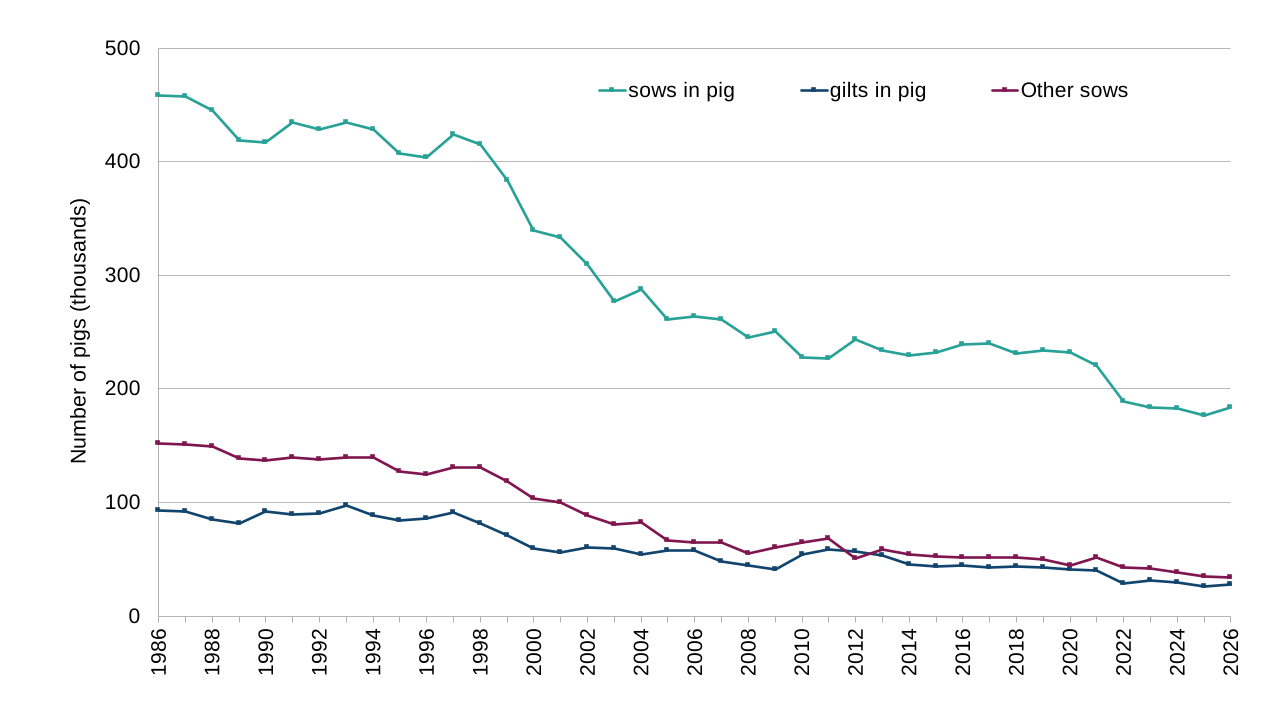
Pigs bucked the trend. Total numbers rose 3.4% to 3.8mn, driven by a 3.4% rise in fattening pigs to 3.5mn and a 2.8% increase in breeding pigs to 322,000.
Figure 3 – Female pig breeding herd in England at 1 June (Number of pigs)
 Poultry was broadly flat at 133.0mn. Broilers, which account for 72% of the total, were stable at 95.3mn, and the breeding and laying flock rose 1.1% to 30.5mn. Turkey numbers fell 6.1% to 2.6mn, while ducks dropped 18.4% and geese rose 32.8%, swings Defra attributed to the volatility of point-in-time poultry counts.
The figures continue a structural decline across England’s ruminant sector, driven by sustained input costs, policy change and weak long-term margins in beef and sheep. British Meat Processors Association chief executive John Powell said the industry was very concerned about the continuing fall, particularly in suckler cow numbers.
A smaller breeding flock points to a reduced lamb crop and constrained cattle supplies into 2027, tightening domestic availability at a time of firm prices. The cattle data are drawn from the Cattle Tracing System and cover all holdings, while the pig, sheep and poultry figures come from a survey of around 38,000 commercial holdings with a 50% response rate.
